What motivates a Swedish journalist couple to publish an international meetings management magazine despite challenging market conditions? It is a question of motivation we have reflected on ever since striking out on our own 25 years ago. To address that,
let us take you on a journey.
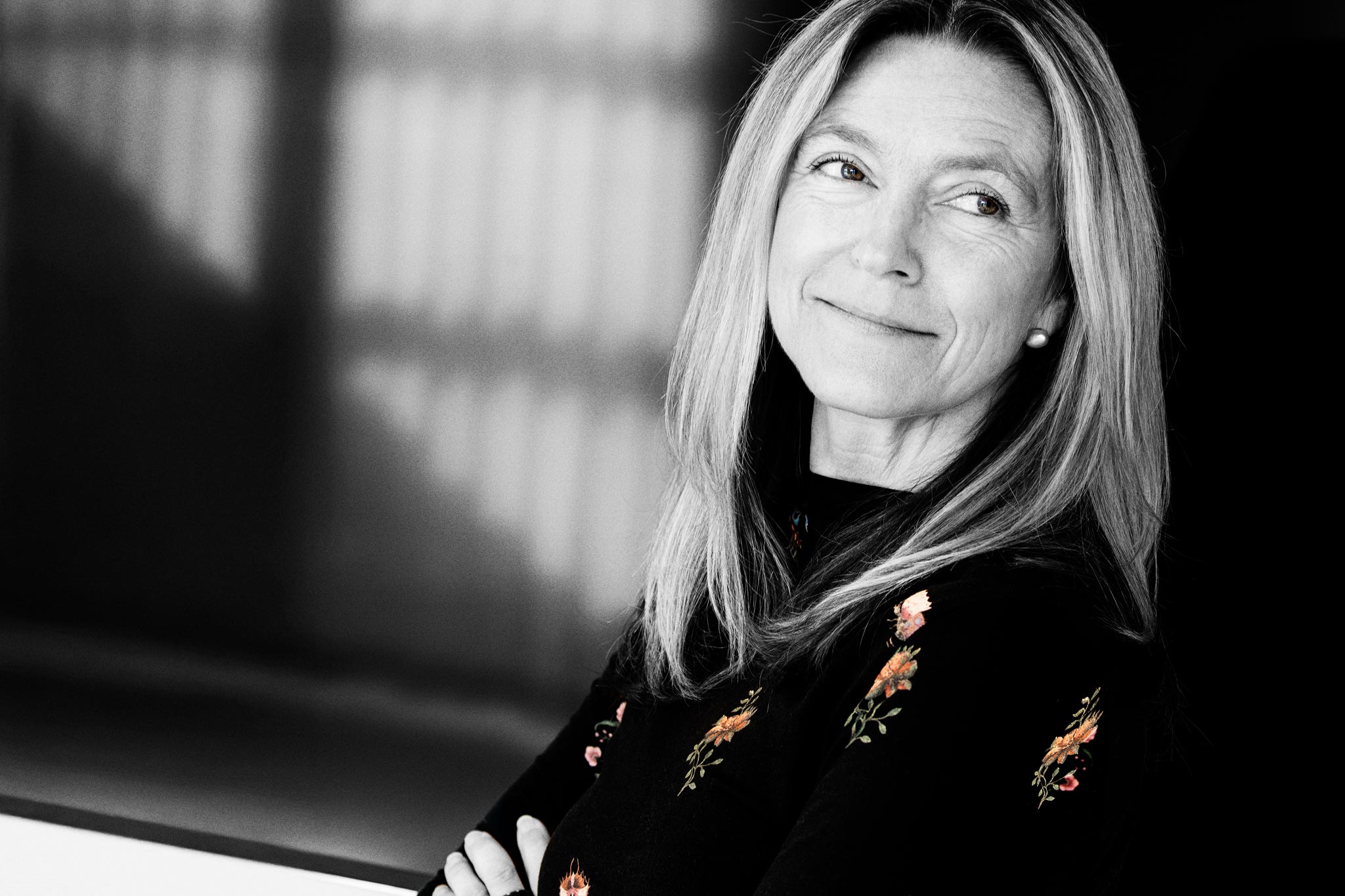
Meetings International is a global publication and media platform focused on international business events. Editor-in-Chief Atti Soenarso co-founded and co-owns the company together with Publisher Roger Kellerman, who heads up business operations. Since leaving Stockholm for southwest Sweden, the married couple has operated from their home, first in Ystad and now in Malmö, a mere 20 minutes from Nordic aviation hub Copenhagen Airport in Denmark.
From the start, Roger Kellerman’s long history and in-depth knowledge of the business events industry, paired with Atti Soenarso’s background in the newspaper sector, have clearly defined their respective roles at Meetings International Publishing. As Roger Kellerman manages the business operations, Atti Soenarso steers the journalistic content, scouting and developing story ideas for the publication. For the past 15 years, the magazine has been produced remotely in Stockholm by creative agency Kellerman Design. Visual art runs deep in the Kellerman clan, with all creative direction for the publishing house successively handled by the family’s two oldest sons, 650 kilometres north of the editorial office.
Since 2003, and its international debut in 2008, the magazine has continuously evolved. It has spearheaded coverage of the psychology of meetings, sustainability, diversity, equity and inclusion, artificial intelligence, safety and security, life science, strategic meeting management, leadership, meeting and neuro design, legacy, and business intelligence. Over the years, an expanding network of international writers has contributed in-depth perspectives across a wide spectrum of subjects.
Publishing a magazine for an international audience brings its own distinct set of challenges. Atti Soenarso notes that understanding global business events requires fresh approaches to both topic selection and questioning. Meetings International has always embraced the spirit of the slow journalism movement – prioritising in-depth reporting over speed, with a steady focus on long-term analysis, background, and perspective. The editorial office places high value on transparency, thorough research and scrutiny, selectivity and editorial independence, long-form journalism, and a reflective relationship with both readers and the broader industry.
“We don’t always fully succeed. Producing an issue often requires compromise, as real-world constraints challenge our ambitions. We always record interviews to ensure we get stories straight, but sometimes interviewees review their quotes and say, ‘Maybe that’s what I said, but it’s not what I meant.’ In cases like these, it’s important to find appropriate, respectful solutions.
“These days, many organisations and company representatives are looking to influence journalism. Over the last decade, PR and communications departments have become far more likely to intervene and attempt to steer the direction of interviews and articles. Increasing numbers of those interviewed report being required to check our questions and their answers with PR officers, department heads or even the CEO before we publish. This signifies a clear cultural shift towards central control and less individual agency.
“When it comes to developing journalism in business-event-focused media, there is room for improvement”
“Our commitment remains to be thought-provoking and challenging. We have always focused on the software – the individuals and the minds that make up the industry – while the hardware looks to advertise. Over the years, many readers have expressed their appreciation with comments like: ‘This magazine is about people and their ideas,’” says Roger Kellerman, reflecting on how the media landscape has changed and developed over the decades that Meetings International has been active.
“Many of us have realised that the internet is not a book, and online or televised live coverage is not a newspaper. Selecting knowledge requires discernment, including knowing when to accept or decline information. Progress demands keeping pace with changing times, but focus can also be directed to the past. Each medium interacts with time in its own way. Speed primarily increases clicks, while depth determines how visitors engage with content. For all of the web’s economic and intellectual value, depth has provided more lasting value than speed. And with that in mind, one can only hope the road leads back to deeper time horizons, to longer-lasting reporting, to paper and print. It is a perspective well worth reflecting on,” Roger Kellerman notes.
In addition to the main magazine, the Meetings International Business Intelligence Report is a specialised publication for decision makers in the business events industry. Published internationally since 2014, it builds on earlier Swedish editions dating back to 2007. These special editions are geared more towards analysing trends and data to capture strategic shifts and ongoing change. Recent topics include the rise of artificial intelligence, leadership, geopolitics, generational shifts, economic impact, long-term strategies and policies, and the lasting value of business events, such as the benefits of knowledge-sharing.
“We are going in-depth, exploring how different societal, political, economic and industry trends affect business events. It’s stimulating to map these various connections, see how they interrelate, and weigh whether they are worth consideration, both for the magazine and for the broader industry. Monitoring the world around us is a stimulating part of our work, and provides fresh knowledge across diverse subject areas, which in turn helps us make new connections, and even view existing knowledge in a new light. On top of that, it’s a privilege to meet so many people from around the world, draw on their expertise, and then share those insights with our readers – it really couldn’t get much better,” says Atti Soenarso.
“One can only hope the road leads back to deeper time horizons, to longer-lasting reporting, to paper and print”
There are also special editions of the Business Intelligence Report that report exclusively on a given destination. So far, international reports have covered Dubai, Vilnius, the Faroe Islands, the Netherlands, Australia, and Seoul, building on earlier Swedish-language destination reports for Finland, Scotland, London, Paris and Nice. Production begins with an extended research period, followed by a fortnight on location, with Atti Soenarso and Roger Kellerman conducting interviews and editorial photography. The results are dedicated issues capturing key sectors and business events across the destinations from multiple distinct perspectives. Atti Soenarso has delivered recurring on-site reporting from Dubai since as early as 1995 – historical insight that laid the groundwork for the first dedicated Dubai BIR in 2016. That and three further Dubai issues have explored themes like the pulse of development, women’s leadership, sustainability, the emirate’s shift toward a knowledge economy, and Dubai as a hub for minds.
People who have spent time with The Kellermans, as they are often referred to internationally, are well aware that making the world a better place is a genuine motivator for them. Their collective driving forces can be summarised as vision, mission and passion, though their individual vantage points differ.
“We aren’t just producing magazines. We have always aimed to change the world for the better. I’ve spent over 40 years contributing to the industry, making the world of meetings visible, challenging traditional views, and showing how meetings drive growth and social development locally, regionally, nationally and internationally. For one, I want to highlight the importance of strategic meeting management for leaders in organisations and companies, and not least for politicians, regardless of operational level. The meetings industry is everywhere and rapidly developing, and emerging international networks keep pushing things forward. The more we highlight through our writing, the more we find to report on,” says Roger Kellerman.
For Atti Soenarso, it all centres around the power of words – from everyday language to how words are chosen to inspire, motivate, show empathy, teach and convey complex ideas. Navigating complexity is always challenging, particularly from a journalistic standpoint, but language helps with that navigation.
“We have always focused on the software, the individuals and the minds that make up the industry”
“We all have a voice, and choices to make regarding the words we use to communicate and the consequences those words have for recipients, organisations, or society as a whole. Each of us should take time to reflect on how we use words, both in speech and in writing. Reframe thoughts when necessary, always consider the recipient and seek the best possible outcome. Words matter.”
Many of those active in the business events industry don’t even realise they are a part of it. During interviews, people often discover contexts they were unaware of. Ripple effects are real, particularly in knowledge and networking. Employees, even part-timers and interns, may learn from meeting notes that others share their questions and problems.
“In a way, our magazine acts as a bridge, connecting people and facilitating knowledge exchange between them. It is deeply rewarding to give people new insights into what meetings truly entail, and to spark inspiration,” says Atti Soenarso.
As for raising awareness, Roger Kellerman points to the persistent levels of unprofessionally run work meetings – captured by his cynical axiom: badly planned, poorly implemented, and never followed up.
“A company investing in a lathe knows down to the day when that machine will pay for itself. They need to apply that same return-on-investment mindset to meetings, drawing on professional facilitators and existing pedagogical tools to actually achieve meeting goals,” he says.
The Meetings International venture began 25 years ago, around the same time the couple’s son Bimo Soenarso Kellerman, now a tv editor, became one of many young professionals born and raised within the industry. Looking back, have things turned out the way they had envisioned?
“As for journalism in business event media, there is still room for development and improvement. Meanwhile, the current media landscape and economic conditions are challenging, times are turbulent overall, and nobody knows how industries will be affected even just ten years from now. Tech advances will reshape the world, but we believe the need for both journalism and in-person meetings will persist,” says Atti Soenarso.
“We’ll keep monitoring innovative people who want to share their ideas, thoughts and insights. Much of our content may be too demanding for casual scrollers, but we believe both souls and brains benefit from workouts,” she adds.
“The better technology becomes, the more reason we find to actually meet … through others, we become more”
While progress hasn’t quite met Roger Kellerman’s expectations over the past 25 years, three major milestones stand out:
- CRISPR Jennifer Doudna and Emmanuelle Charpentier met at a 2011 microbiology congress in Puerto Rico, collaborated on the Cas9 enzyme, and unveiled their “genetic scissors” just 14 months later – earning a Nobel Prize in 2020 for what the Nobel Foundation aptly dubbed: “a life-changing encounter.”
- Singapore exemplifies government-led success, using conferences to position itself as a strategic hub for fintech, medicine, and advanced manufacturing. As Asia’s top conference destination for 23 consecutive years, its business events revenue reached €1.6 billion last year, up 35 per cent.
- PCOs Professional congress organisers are redefining their profession. As the International Association of Professional Congress Organisers notes, clients no longer just want them to “deliver an event,” but to “advance their mission.”
Both mention the many personal encounters that have left an impression. The reasons a personal meeting lingers vary, but often it is when new knowledge becomes new insight.
“The ‘in-between’ moments are often the most valuable parts of conferences and congresses, happening outside official lectures – during coffee breaks, hallway passings, or over a casual drink. These informal environments build trust, foster organic creativity, and establish real relationships in ways a scheduled virtual call cannot,” says Atti Soenarso, referencing what is known as The Kellerman’s Law.
For decades, the industry feared that teleconferencing, video streams, and virtual reality would kill the live events market. Roger Kellerman’s Law is a famous maxim in the global business events industry stating simply: “You can’t share a beer on the internet.
“The better technology becomes, the more reason we find to actually meet in real life, because tech cannot replicate sensory or informal human bonding. The Kellerman’s Law provides a foundational philosophical argument for why physical, face-to-face meetings will never be fully replaced by digital technology. It is a metaphor for the irreplaceable nature of human connection and physical presence,” says Roger Kellerman.
His simple maxim remains a timeless defence of the business events industry, reminding us that humans are inherently social beings who require shared physical experiences.
Yes, but what about that initial question of motivation? Reporting on the lives and thoughts of outstanding individuals remains a continuous journey into the collective minds and experiences of a dynamic industry in an ever-changing world. Through others, we become more. And through sharing that experience with our readers, we hope they also will.