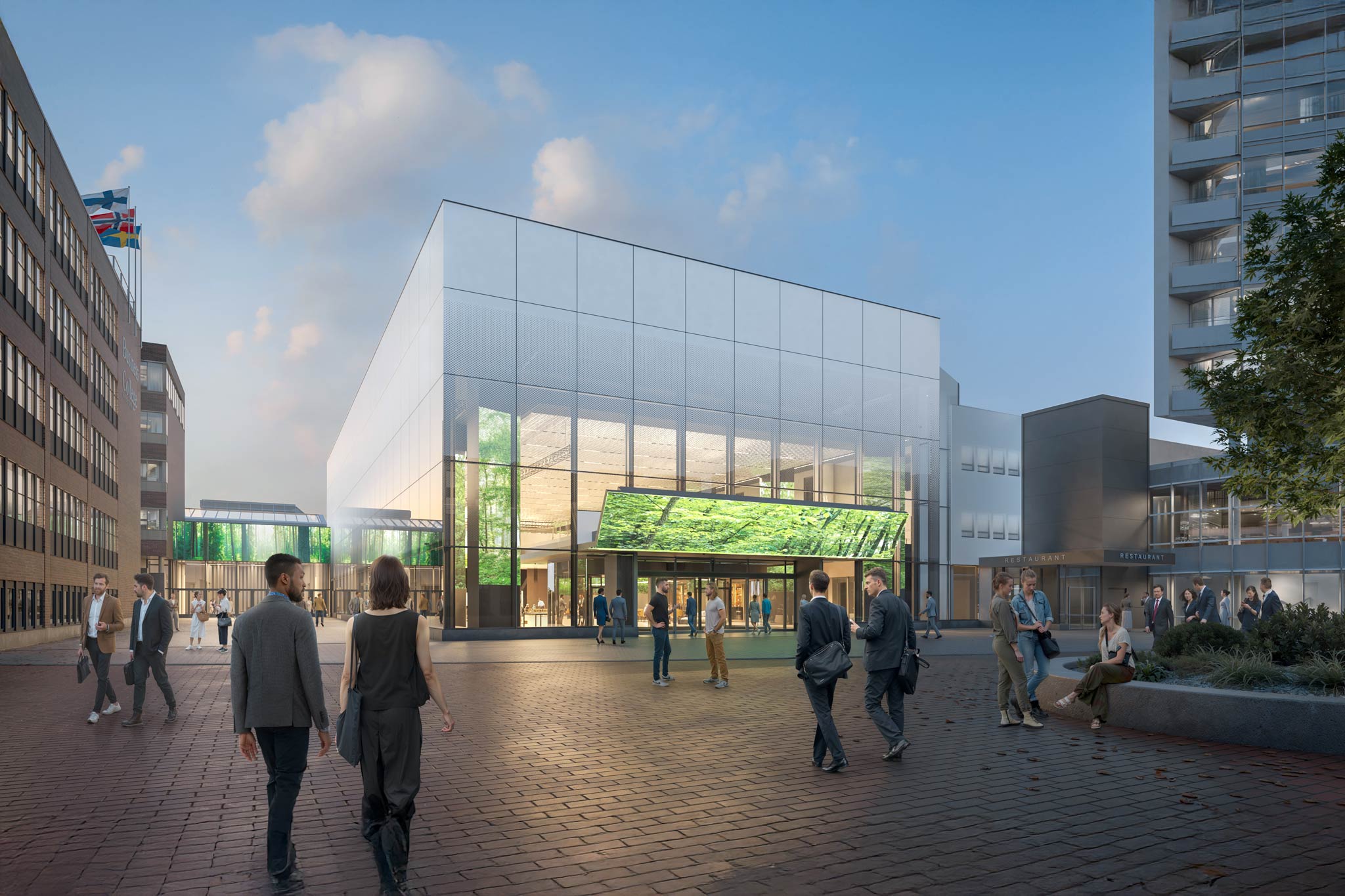


The Nobel Foundation has presented the first vision images for the Nobel Center project – a public building for science, literature, and peace in central Stockholm. It will be an international symbol of knowledge, focusing on the stories and groundbreaking achievements of Nobel Prize winners. David Chipperfield Architects is designing the building, made possible by generous donations from the Erling-Persson Foundation and the Knut and Alice Wallenberg Foundation.
The new building will be constructed on Stadsgårdskajen at Slussen in Stockholm, overlooking Gamla Stan, Skeppsholmen, and Djurgården. In 2031, visitors to the building will be able to experience Alfred Nobel’s unique legacy in a whole new way when his handwritten will is put on permanent display for the first time. Here, people from all over the world will also be able to explore exhibitions, listen to lectures, engage in dialogue, and take part in cultural events on everything from black holes and medical advances to literary classics and poverty reduction.
“The new Nobel House will be an international symbol of knowledge – welcoming, warm, and open to all. The achievements of the Nobel Prize winners show how knowledge can change the world. What is impossible today may be possible tomorrow. Our goal is to make that power available to more people. It will be a house for science, literature, and peace, a powerhouse for what the Nobel Prizes stand for, and an inspiration both for us visitors today and for future generations,” says Hanna Stjärne, CEO of the Nobel Foundation.
An important meeting place
Nobel laureates, researchers, students, schoolchildren, and visitors from Sweden and around the world will visit the house. It will also serve as a base for international, interdisciplinary meetings linked to the Nobel Prize that currently take place around the world.
“The new Nobel House will be an important meeting place, a hub for international academic life, where Sweden, through the powerful influence of the Nobel Prize, will take its place at the heart of the knowledge and science community. It is a house where knowledge is created, where research is shared, and perspectives are exchanged, for meetings between Nobel Prize winners and students, between leading experts in current research in the Nobel Prize fields and an interested public,” says Astrid Söderbergh Widding, Chair of the Nobel Foundation.
Construction is scheduled to begin next year, with David Chipperfield Architects’ Berlin office leading the design. The building will feature four interconnected volumes complementing the architecture of Södermalm and the adjacent areas across the water in Gamla Stan. Rooftop and entrance terraces will create new gathering places with impressive views of Saltsjön and Mälaren. The public area in front will seamlessly transition into an open, transparent entrance level, accessible from the north and south, with a foyer featuring a shop and restaurant.
The choice of wooden frames, recycled brick, and other materials has been made with low climate impact in mind. The facades are made of brick, a material that has characterised Stockholm’s architecture for centuries. The reused brick gives the building a sense of permanence and weight. The red hue is echoed in the city’s classic brick buildings, such as the City Hall.
“The project creates, for the first time, a home for activities related to the Nobel Prize. We have designed an open house for science, literature, and dialogue – a building adapted to this mission at several levels. With its prominent location at Slussen, the building has a clear public presence, deeply rooted in the place and in the everyday life of the city, while reflecting the global significance of the Nobel Prize. At a time when expertise and debate are more important than ever, our hope is that the Nobel Center will become a central place for knowledge and exchange,” says Sir David Chipperfield, founder of David Chipperfield Architects.
How the project is financed
The Erling-Persson Foundation and the Knut and Alice Wallenberg Foundation are financing the Nobel Center project. In total, the two foundations are donating SEK 2.3 billion, divided equally. The funds will be used to construct the building and to create a large, permanent exhibition about Alfred Nobel, the history of the Nobel Prize, and the groundbreaking achievements of the laureates. The Nobel Foundation is responsible for the remaining financing of the construction project, with the total cost estimated at just over SEK 2.5 billion.
“The Nobel Center will serve as a meeting place for knowledge, inspiration, and new perspectives, for people in Sweden and internationally. The Nobel Prize is already globally recognised, highlighting the importance of science, culture, and peace for positive social development. Through the Nobel Center, these values will reach an even wider audience, inspiring the next generation of researchers in Sweden – crucial for our nation’s continued leadership in knowledge. We are pleased that the project is entering its next phase. For the Erling-Persson Foundation, it remains important, alongside the Knut and Alice Wallenberg Foundation, to support and realise this initiative,” says Stefan Persson, Chairman of the Erling-Persson Foundation.
Peter Wallenberg Jr, Chairman of the Knut and Alice Wallenberg Foundation, emphasises that securing funding for the Nobel Center represents a significant step for Sweden as a nation of knowledge and research. The Nobel Prize promotes curiosity, courage, and long-term thinking – values that strengthen Swedish research and education and enhance Sweden’s attractiveness to researchers and students. He expresses anticipation in working with the Erling Persson Foundation, the Nobel Foundation, and the City of Stockholm to create an inclusive space in Stockholm that will foster inspiration and dialogue across borders.
The new inspirational exhibition, which opened on January 15 at the Nobel Museum in Gamla Stan, tells the story of the Nobel Center project and offers visitors an insight into the work to be carried out over the next few years. Today, the building permit application for the project is also being submitted to the City of Stockholm. A detailed site plan has been approved, setting the design framework. According to the current timeline, construction is scheduled to begin in 2027, and the building is expected to open in 2031.
Facts
- The Nobel Center will focus on public activities and be open to everyone, year-round.
- The Nobel Prize Museum will move into the new building and its activities will be financed through revenue from, for example, ticket sales, state and municipal support, and through sponsorship and partnership agreements, in a similar way to how the Nobel Prize Museum is financed today.
- The Nobel Prize award ceremony will continue to be held in the Stockholm Concert Hall and the Nobel Banquet in Stockholm City Hall.
- David Chipperfield Architects Berlin is the architect for the Nobel Center project at Slussen in Stockholm.
- The Erling-Persson Foundation and the Knut and Alice Wallenberg Foundation, together with the Nobel Foundation, are financing the building and the permanent exhibition. In total, the two foundations are donating SEK 2.3 billion, divided equally.
- The construction of the building, including the new permanent exhibition, is estimated to cost just over SEK 2.5 billion.
- Construction will begin in 2027, and the opening is planned for 2031.
- The Nobel Center will be built on the property Södermalm 7:87 (Hamnmästaren) along Stadsgårdskajen at Slussen. The property was originally intended for a large office building, for which a detailed plan has already been approved. The detailed plan sets out clear, binding guidelines for the building’s shape, height, and width.