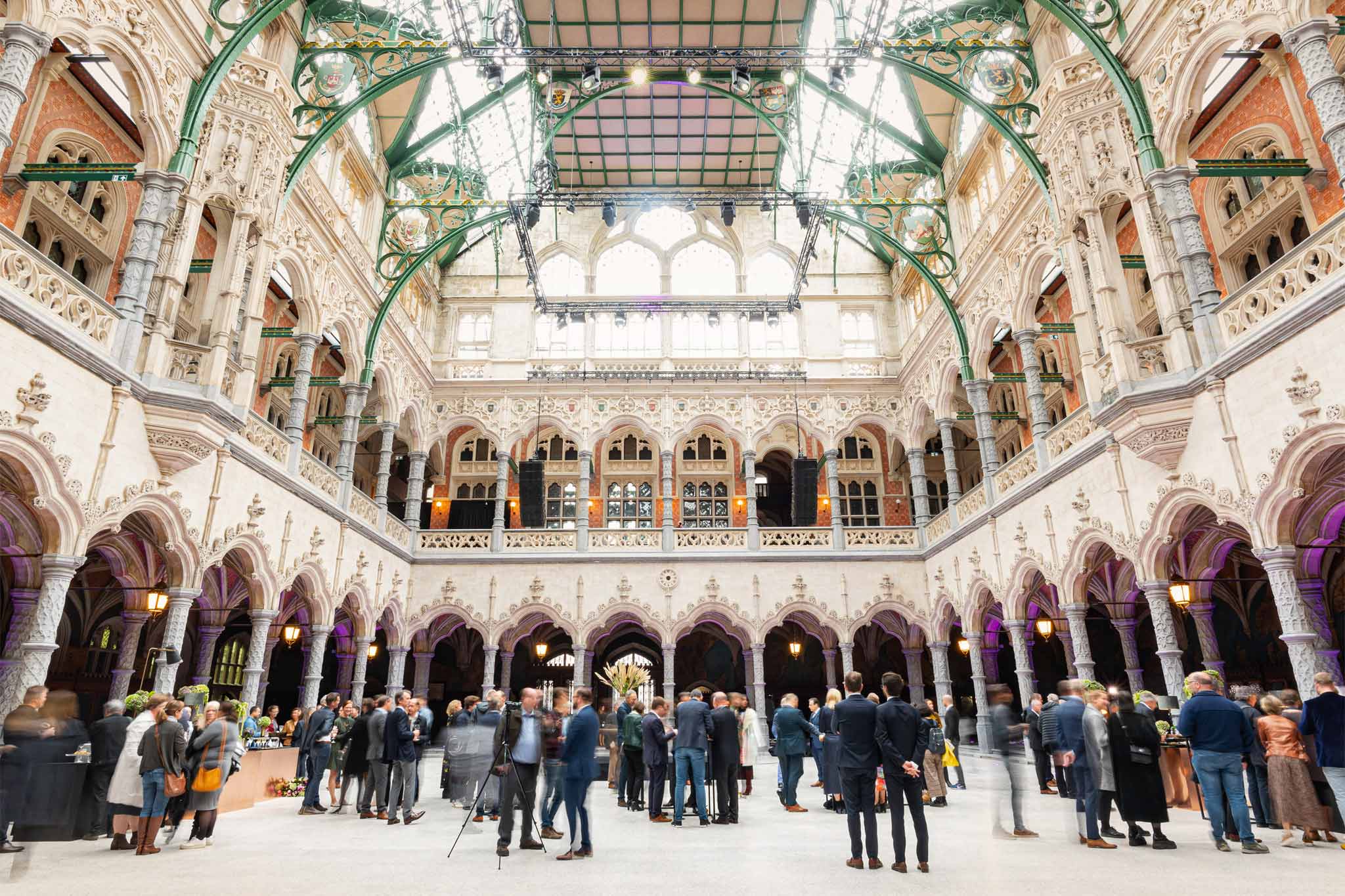
Antwerp, Belgium’s good-looking second city in the region of Flanders, grew wealthy on the profits of its port, trading since the 16th century in diamonds, priceless works of art and the spices and spoils of assorted empire.
Today, Antwerp is one of Europe’s most dynamic cities for meetings, incentives, conferences, and events, offering a blend of historical grandeur, modern infrastructure, and cosmopolitan vibrancy. The Antwerp Convention Bureau provides comprehensive support, from venue selection to local partnerships, ensuring smooth event planning and execution. The city has a population of approximately 562,000, and the Metropolitan Area is estimated to have around 1.2 million people.
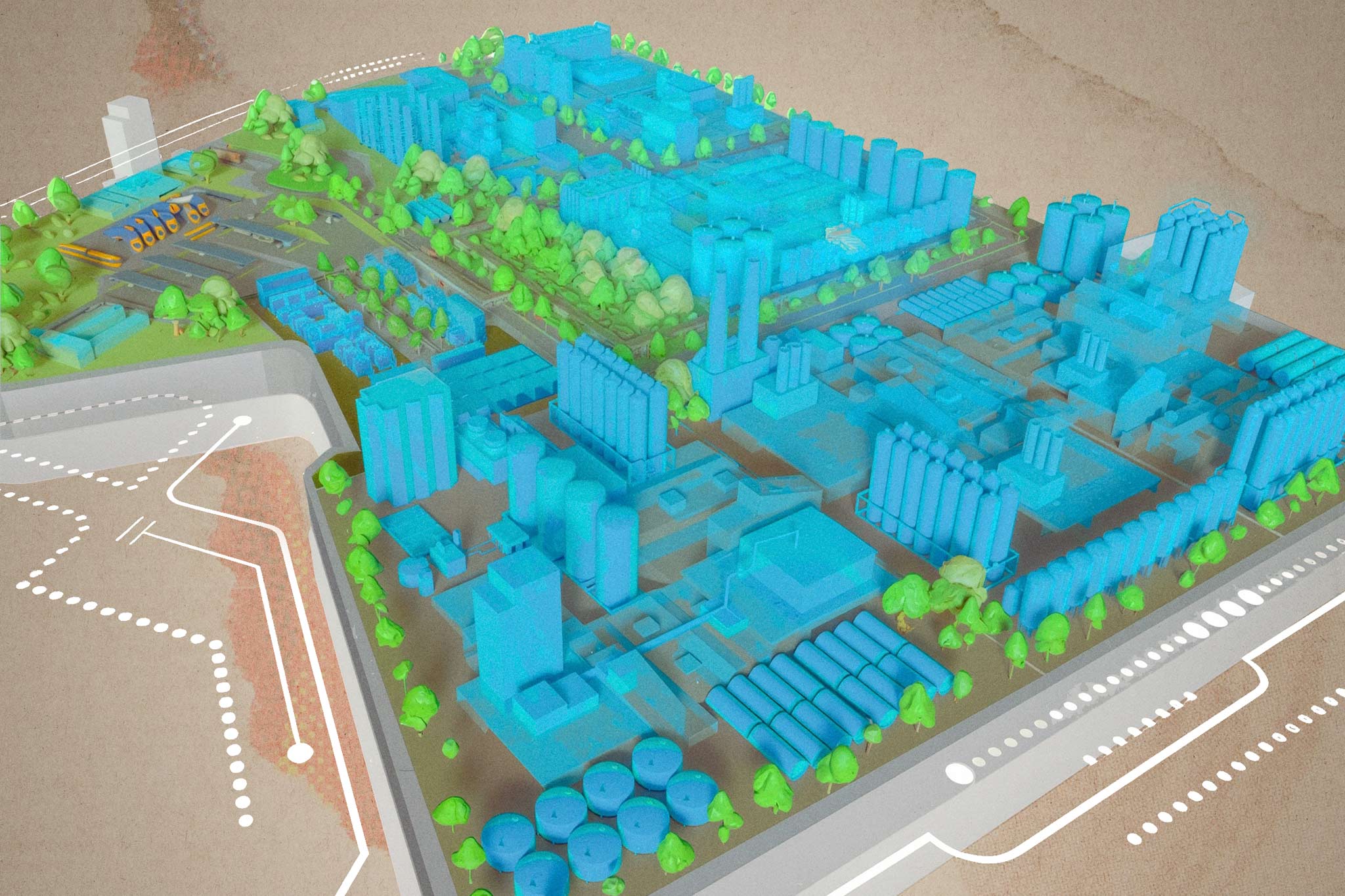
The city’s key sectors include its world-class port, the largest integrated chemical cluster in Europe, and a global diamond industry centred in its Diamond District. The town also has emerging strengths in digital innovation, sustainable energy transition, and healthcare, along with a notable presence in fashion and retail.
In the European health innovation landscape, Antwerp distinguishes itself not just through the presence of renowned institutions or the quality of its healthcare infrastructure, but through its ability to enable innovation structurally. The city’s health and life sciences cluster transforms healthcare through an interconnected ecosystem of data, research, industry, and care provision. Antwerp’s strength lies in coordination. Its dense but highly active network of research institutions, clinical centres, startups, and innovation platforms operate within an environment that favours collaboration. It makes the destination a hub for scientific advancement and a testbed for real-world health solutions.
Antwerp’s long history as a centre for trade and innovation has cultivated a culture of experimentation and adaptation. This culture equips the city with the agility to navigate modern challenges. The Antwerp entrepreneurs’ ability to evolve allows them to address pressing global issues like climate change, energy transitions, pandemics, digitisation, and mobility. Antwerp’s innovation landscape is characterised by The Beacon, a technology institute connecting digital innovators to solve the challenges of the Belgian cities, ports and industries. It fosters collaboration among over a hundred companies and research institutes.
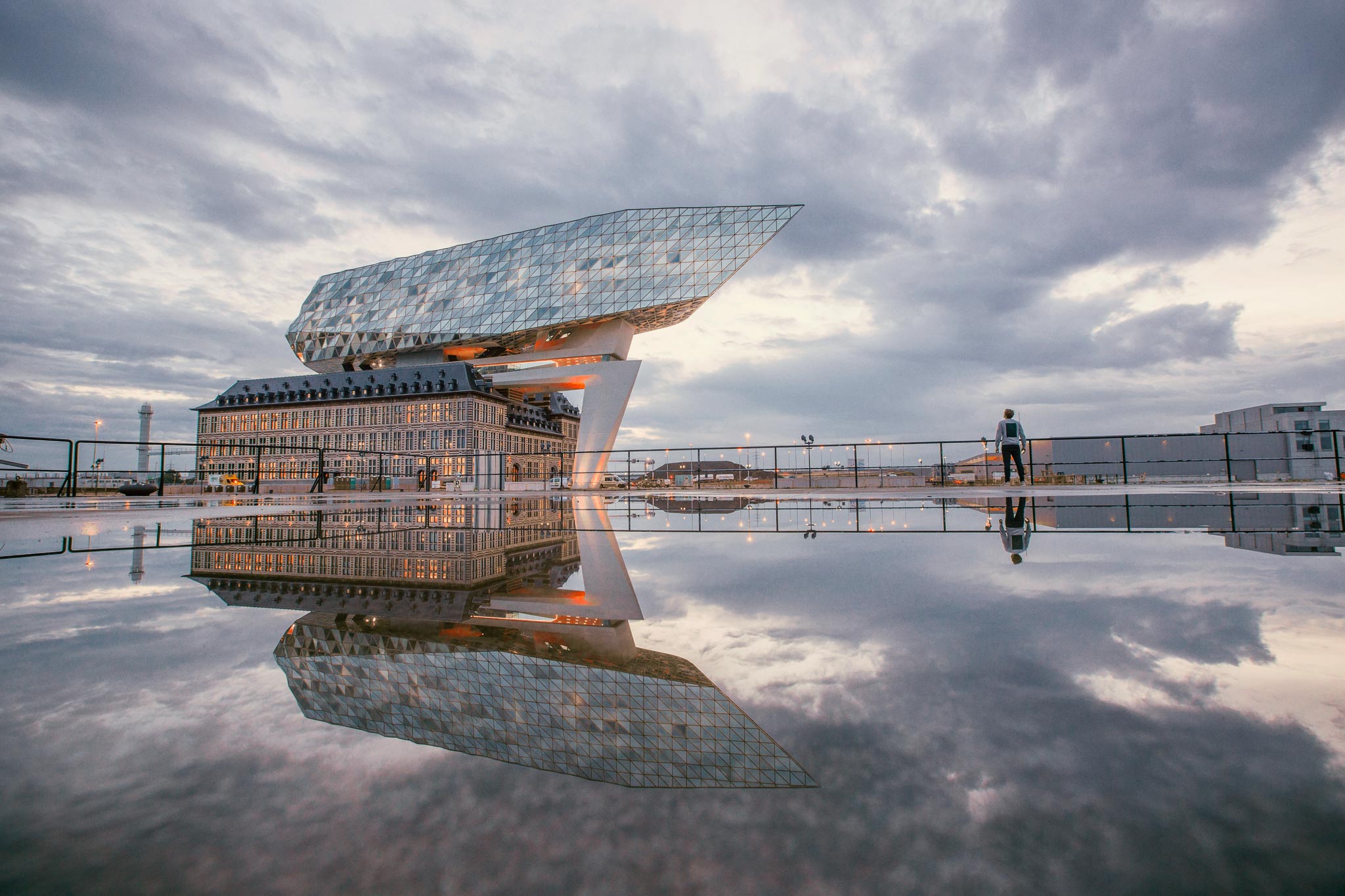
The port, the second-largest in Europe, plays a vital role in world commerce, trading 86 per cent of the world’s rough diamonds and storing half the world’s shipped coffee beans. The harbour is also home to the second-largest petrochemical cluster. Now powered by a vast array of wind turbines.
The city serves as a central hub for international trade and commerce. Some of the biggest companies active in the region include Atlas Copco, Nike, Cummins, The Coca-Cola Company, BMW Group, L’Oréal, Procter & Gamble, and the Lego Group. If their meeting planners need to organise a business event, they have a range of options to choose from.
Antwerp boasts that the whole town is your venue, which is hardly surprising given its incredible event infrastructure, from legendary heritage sites to state-of-the-art conference centres. The city’s leading conference venue, A Room with a Zoo, integrates one of Europe’s oldest zoos with world-class facilities and memorable settings. It is a living historic part of the venue with a rich legacy and its own award-winning science and research centre. The original and protected 19th-century architecture provides a peaceful backdrop to events. The Queen Elizabeth Hall accommodates up to 2,000 delegates, the Marble Hall accommodates up to 350, the Darwin Hall accommodates up to 320, and the Gorilla Rooms accommodate up to 500 people.
“Antwerp is Belgium’s long-standing fashion capital, and also home to one of the world’s leading fashion academies”
Profits from the congresses and events taking place at A Room with a Zoo support animal welfare, education and awareness building. The Antwerp Zoo Society plays a leading role on the world stage in terms of scientific research and conservation, creating partnerships between meetings and conservation that directly tie into the business events industry to make it more sustainable.
Other majestic backdrops for business events are historical locations such as the 16th-century Handelsbeurs, the world’s first purpose-built stock exchange, the Imperial Meir Palace, and the Antwerp City Hall.
Modern industrial spaces, including converted warehouses like the Felix Pakhuis and trendy lofts in the former harbour district, cater to creative and large-scale gatherings alongside specialised venues such as the 7,000-seat, 24-screen Kinepolis Antwerp, the contemporary Blue Point Antwerpen, which is ideal for high-tech meetings. The Royal Yacht Club and the Fashion Museum Antwerp add further versatility.
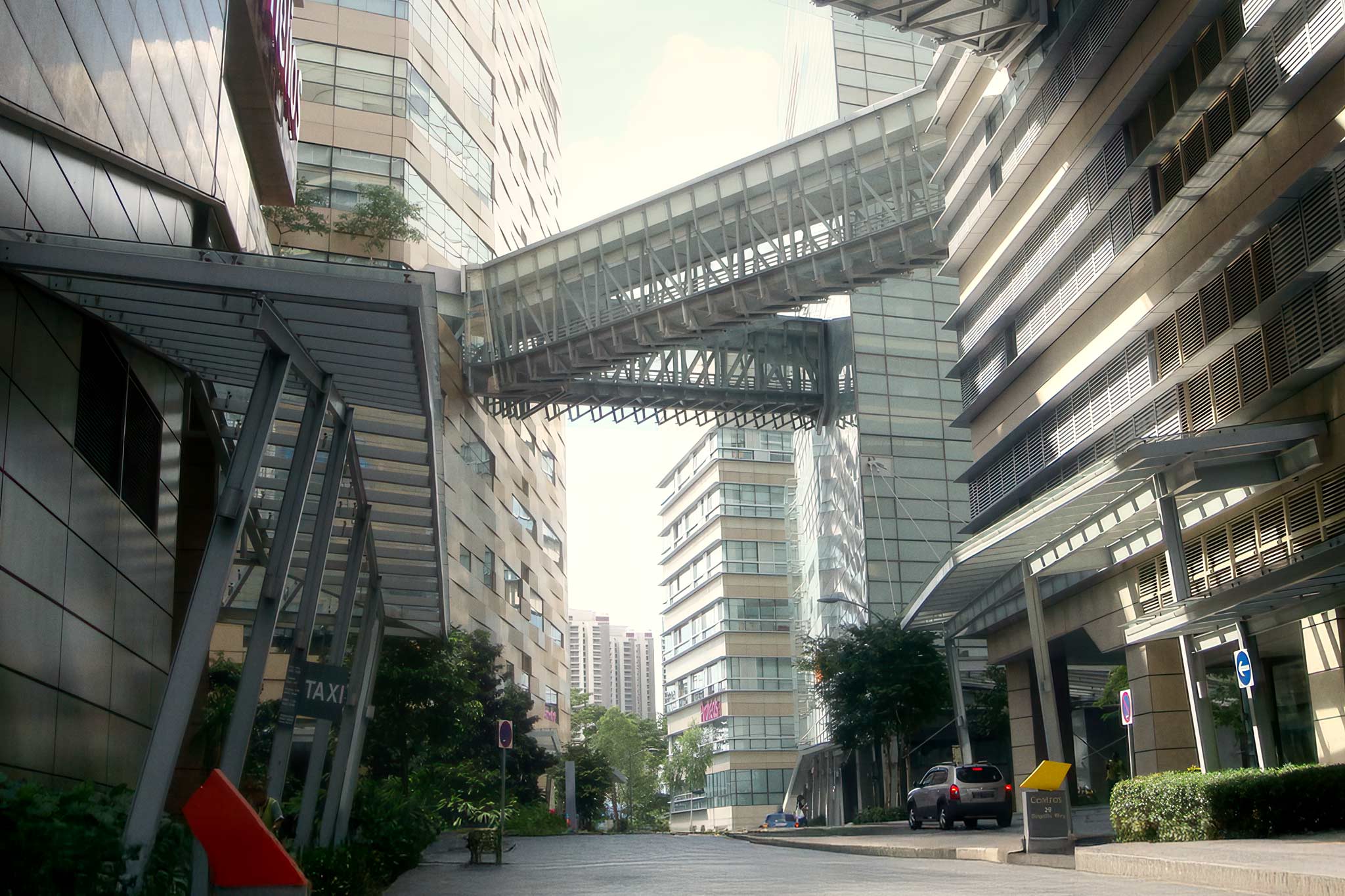
The architectural diversity, from medieval guildhalls to cutting-edge contemporary buildings, creates inspiring environments for business events. The compact size of Antwerp allows organisers to create citywide experiences, seamlessly integrating different venues, hotels, and social programs. The holistic approach enables events to tap into the city’s heritage, vibrant arts scene, and culinary offerings, while connecting with the locals. In short, Antwerp is a likeable and walkable city.
Antwerp is home to the University of Antwerp. Around 50,000 students have forged a reputation as an unlikely rival to Paris in the fashion world, alongside Milan. Today, Antwerp is Belgium’s long-standing fashion capital, and also home to one of the world’s leading fashion academies.
However, let us not forget the past: Abraham Ortelius (1527–1598) and Christophe Plantin (1520–1589) were two of the most influential figures in the intellectual and publishing life of 16th-century Antwerp. Their collaboration and friendship played a pivotal role in cartography, printing, and the dissemination of human knowledge during the Renaissance.
Abraham Ortelius was a Flemish cartographer recognised as the creator of the first modern atlas, published in 1570. His work revolutionised mapmaking by gathering maps in a uniform format and style, making geographical knowledge more accessible and systematic. Christophe Plantin was a renowned printer, publisher, and bookseller who established the Plantin Press, Europe’s largest and most advanced printing house. He was central in Antwerp’s humanist circles and published many scholarly, scientific, and religious works.
The Plantin-Moretus Museum in Antwerp is an institution that combines the legacies of two of the city’s most influential Renaissance figures. The museum is the only museum in the world inscribed as a UNESCO World Heritage Site for its role in the history of printing and publishing. Christophe Plantin established his printing press in Antwerp in 1555, becoming the largest and most influential printing house of its time, renowned for the quality and breadth of its publications.
The museum holds around 25,000 early printed books, and over 600 manuscripts, including significant works such as:
- The Biblia Polyglotta (1568–1573)
- The Cruydt-Boeck (Herbals) by Rembert Dodoens
- An anatomical book by Andreas Vesalius
- The Tenth (1585), Simon Stevin’s book of decimal fractions
- A rare copy of the Gutenberg Bible
The museum also holds a copy of Theatrum Orbis Terrarum, the first modern atlas, by Abraham Ortelius, which is a highlight of the museum’s collection. The exhibition also features portraits and drawings by Peter Paul Rubens, a close friend of the Moretus family, as well as other works from the Antwerp School.
“The compact size of Antwerp allows organisers to create citywide experiences, seamlessly integrating different venues”
You cannot visit Antwerp without tasting the Belgian chocolate. At Chocolate Nation, you have 14 thematic rooms, submerging you in the wondrous world of Belgian chocolate. Starting in the jungle between the cocoa trees, you follow the cocoa to Antwerp’s port. A gigantic fantasy machine showcases the process of making chocolate and explains the origin of its velvety smooth taste. Every visitor gets an insight into the traditions surrounding the sweet gold and will learn what makes Belgian chocolate special and why Belgians are so proud of it.
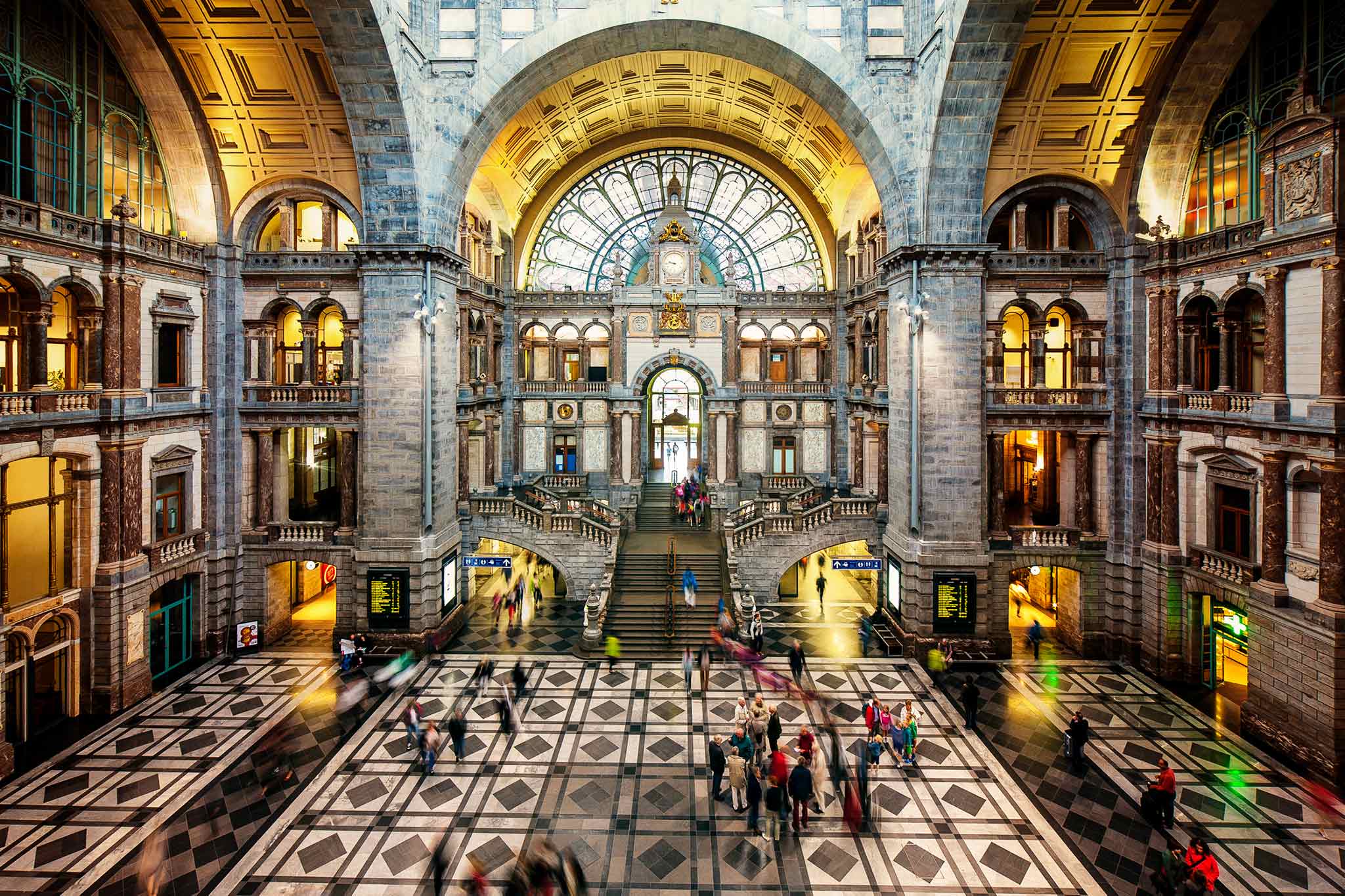
Today, most visitors arrive in Antwerp by train. You can get from Brussels Airport-Zaventem by train in 44 minutes on average, with the fastest journeys taking only 30 minutes. Antwerpen-Centraal railway station is an eye-catching masterpiece of Art Nouveau architecture, a style that is extensively represented throughout the city.
The character of the city also reveals itself through food. There are many places to go for a culinary treat in a stunning setting. You can find a galaxy of Michelin-starred restaurants, but don’t forget the local dishes like, for example, a steaming pot of mussels with a bucket of fries and a small bowl of mayonnaise. By the way, fries are an integral part of Belgium’s gastronomic heritage and Belgian fries are often called the world’s finest. Traditionally, they are sold in a paper cone or a cardboard tray with a large dollop of sauce on top.
A hideaway in historic Antwerp is the Botanic Sanctuary, which was once a monastery. Today, it is a top-class hotel with 108 rooms spread across five historic buildings, each with its own story to tell: Sint-Jons, Monasterium, Sint-Elisabeth, Alnetum, and the Filips van Marnix House. The sanctuary also has Hertog Jan, a two-star Michelin restaurant, or savour the art of culinary elegance at one-star restaurant Fine Fleur. Within the storied walls of the sanctuary, there is a congress centre with 14 different meeting rooms for up to 350 persons. Also, there is a health spa and a botanical garden that master the art of tranquillity and wellbeing.
The city of Antwerp is welcoming several international congresses on different topics in the next few months, for example:
- Annual Summit 2025: Uncharted Waters 21–22 October. After Tokyo, the Global Maritime Forum will share knowledge and insights in Antwerp.
- SNOMED CT Expo 23–24 October. Unites clinical terminology SMEs from around the world.
- Asset Performance Conference 2025 4–5 November. Europe’s leading conference on digital transformation in Maintenance and Asset Management.
- 8th International Conference on Microbiome Engineering 1–3 December. This event brings together scientists across the quickly growing field of microbiome engineering.
- ESF Europe 2026: Energy & Sustainability Forum) 24–26 February, 2026. The forum is established as the only event dedicated to downstream decarbonisation and sustainability.
- 10th EuChemS Chemistry Congress (ECC10) 12–16 July, 2026. The congress allows the attendees to listen to and interact with some of the most celebrated researchers in the world.