China’s life science sector is evolving from a generic manufacturing hub into a global innovation powerhouse. Driven by significant R&D investment, top-tier talent, and strong government support under the 15th Five-year Plan, China has become the world’s second-largest pharmaceutical market and a leader in biologics, as well as cell and gene therapies.
The 15th Five-year Plan (2026–2030), adopted in March 2026, prioritises “new quality productive forces,” technological self-reliance, and national security to upgrade China’s industrial base. Life sciences, specifically biomedicine, genetic research, and AI-driven healthcare, are designated as strategic emerging industries to drive economic growth, with the goal of raising average life expectancy to 80 by 2030.
Imagine a map of global science powerhouses – do you immediately picture Beijing, Shanghai, Shenzhen, Suzhou, or Guangzhou? Since the early 2000s, these cities have become dense life science clusters, leading in the manufacture of pharmaceutical ingredients and low-cost generic drugs for major pharmaceutical companies. Today, China’s life science sector is globally recognised and remains a strategically important market for multinational suppliers.
The big three innovation regions China’s national strategy now focuses on three major science and technology innovation hubs: the Beijing–Tianjin–Hebei region, the Yangtze River Delta anchored by Shanghai, and the Greater Bay Area led by Shenzhen and Guangzhou. These hubs are expanding from single cities into regional clusters. Beijing, Shanghai, and Guangdong (home to Shenzhen and Guangzhou) report the country’s highest R&D intensities, underscoring their roles as primary drivers of life science and deep-tech growth.
In Beijing’s northwest suburbs, Changping’s Life Valley and the Zhongguancun Life Science Park form one of China’s leading life science innovation districts. The park hosts more than 600 companies, including major biotechs, and is closely linked to the Beijing Free Trade Zone and Future Science City. It is supported by substantial government “mother funds” that invest billions of yuan in health projects and synthetic biology ventures.
Beijing leverages its dense ecosystem for business events through high-level scientific conferences and congresses that highlight China’s regulatory reforms and AI-driven drug discovery, investor-startup partnering forums connected to the city’s healthcare investment funds, and government-branded “international showcases” that position Life Valley alongside global benchmarks such as Kendall Square (Cambridge, USA) and Biopolis (Singapore). Events typically combine closed-door policy roundtables with curated site visits to science park labs and incubators, providing international delegates with context and proof of concept.
Shanghai and the Yangtze River Delta The city has emerged as a global science and technology hub, ranking highly among international scientific cities and serving as the anchor of the Yangtze River Delta innovation region. Its life science and biopharma strengths are reinforced by nearby hubs in Jiangsu and Zhejiang as the national strategy extends Shanghai’s innovation remit across the entire delta. For example, Zhangjiang Science City in Shanghai hosts over 1,700 biomedical businesses, including major companies such as Astra Zeneca, Pfizer, Boehringer Ingelheim, Roche, Novartis, Johnson & Johnson, and GSK.
“China has become the world’s second-largest pharmaceutical market and a leader in biologics, cell, and gene therapies”
Shanghai’s meetings strategy integrates its convention infrastructure with its biotech branding. Biotech China, a flagship biopharma exhibition held at the Shanghai New International Expo Centre, focuses on advanced biotechnology, R&D, and production services, using the trade show floor to connect Chinese biotech, major pharmaceutical companies, and global service providers. Conference programming addresses regulation, technology, and patent landscapes, while the format emphasises large-scale exhibitions, matchmaking zones, and co-located specialist forums to maximise partnering opportunities within a short timeframe.
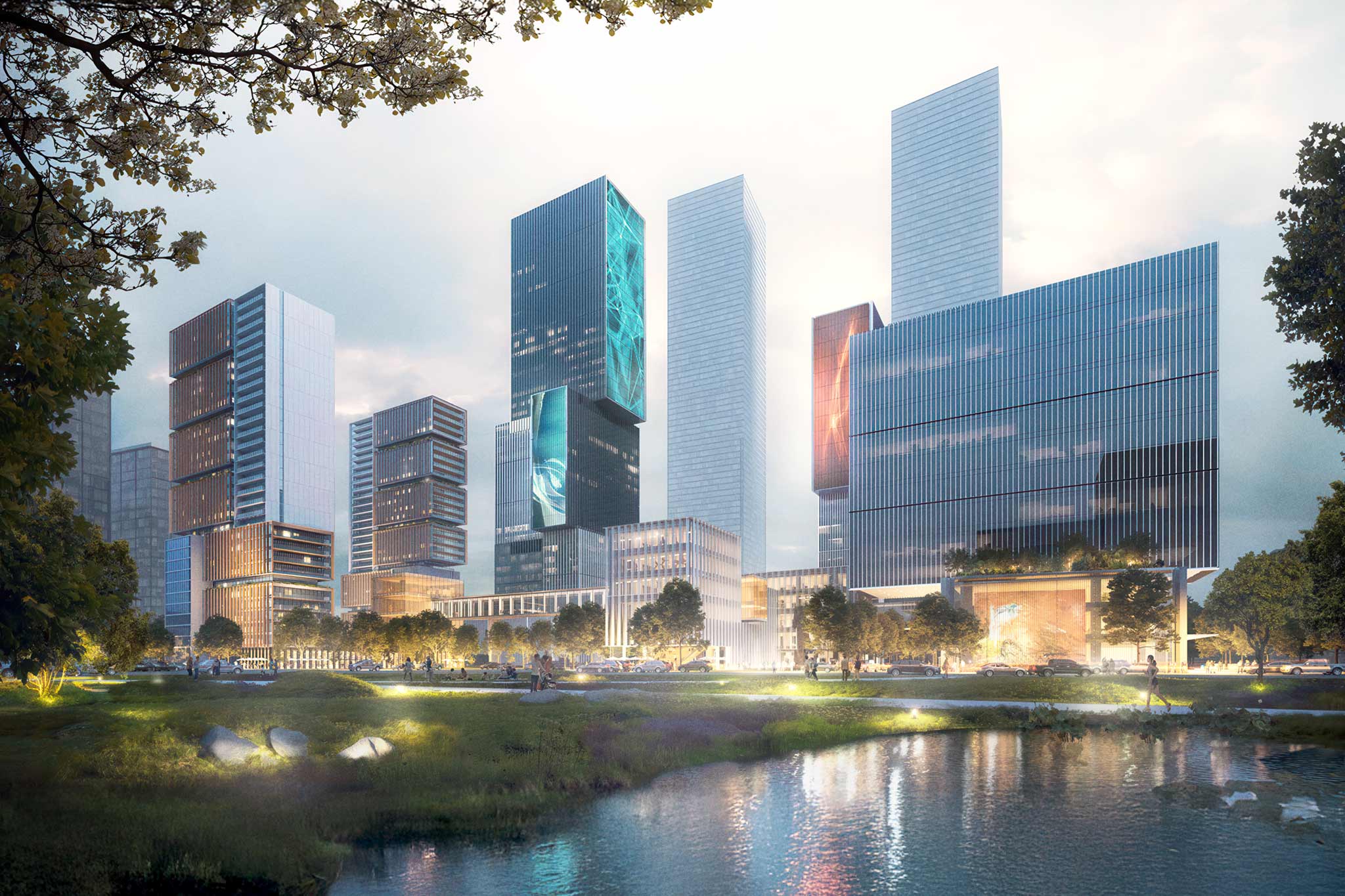
Shenzhen, Guangzhou and the Greater Bay In southern China, Shenzhen has established itself as a world-class innovation city. Guangming Science Park in Guangming District is designed as a flagship science city that integrates scientific research with sustainable and cultural functions. The park covers more than 200 hectares and follows a “One Core, Two Wings” layout, featuring a central scientific hub with adjacent green and recreational zones, to attract researchers, residents, and visitors.
Greater Bay Area (GBA) life science meetings are typically outward-facing and investment-driven. Shenzhen’s science parks host international innovation summits that connect digital health, med-tech, and biopharma, while Guangzhou and other GBA cities contribute medical universities and hospital networks as clinical research partners. Event strategies often emphasise “innovation plus lifestyle,” embedding conferences within new science city campuses and incorporating social programs that introduce delegates to the green corridors and waterfront urbanism central to the Greater Bay Area’s global brand.
Rising secondary hubs: Chengdu and Suzhou Beyond the coastal centres, inland cities are leveraging life science clusters and conference strategies to gain global recognition. In Chengdu, the Tianfu International Bio-Town has impressed visiting Nobel Prize laureates and senior scientists, who have described the city’s biotechnology research environment as “astonishing,” highlighting its ambition to become a leading biotech hub in western China. Local authorities organise curated tours, laboratory visits, and high-level symposia with international scientific panels to position Chengdu as an investment destination and credible research partner.
Suzhou, located between Shanghai and Nanjing, has become a biopharma manufacturing and R&D hub and is increasingly hosting large-scale sector events. For example, BioChina 2026 in Suzhou is expected to attract more than 30,000 professionals, 500+ international delegates, and hundreds of speakers across 250 specialist forums covering early-stage R&D, clinical development, manufacturing technologies, regulatory submissions, and market access. The event’s design demonstrates how Chinese cities now approach meetings strategically, focusing on large scale for visibility, in-depth content for deal-making, and clear objectives for cross-border collaboration and capital strategies to integrate local clusters into global value chains.
Driven by national policies and rising market demand, China’s biotech sector is expanding rapidly. However, industry overcrowding, and funding constraints threaten continued progress. In 2026, the life science sector will face significant challenges, including price pressures, geopolitical tensions affecting cross-border transactions, and the need to scale AI applications beyond research and development.