
Singapore’s strategic position as a bridge between Asian and global markets enables it to play an outsized role in driving biomedical advancements. It works both ways, as a gateway for global companies to access the growing opportunities in Asia, and as a springboard for regional companies to expand worldwide.
Building on this strategic role, Singapore is set for its next evolution. Over the next decade, the country aims to move from a regional life science hub into a living laboratory for precision health, healthy longevity and advanced biomanufacturing, with its science parks and innovation districts as the key operating system for this transition.
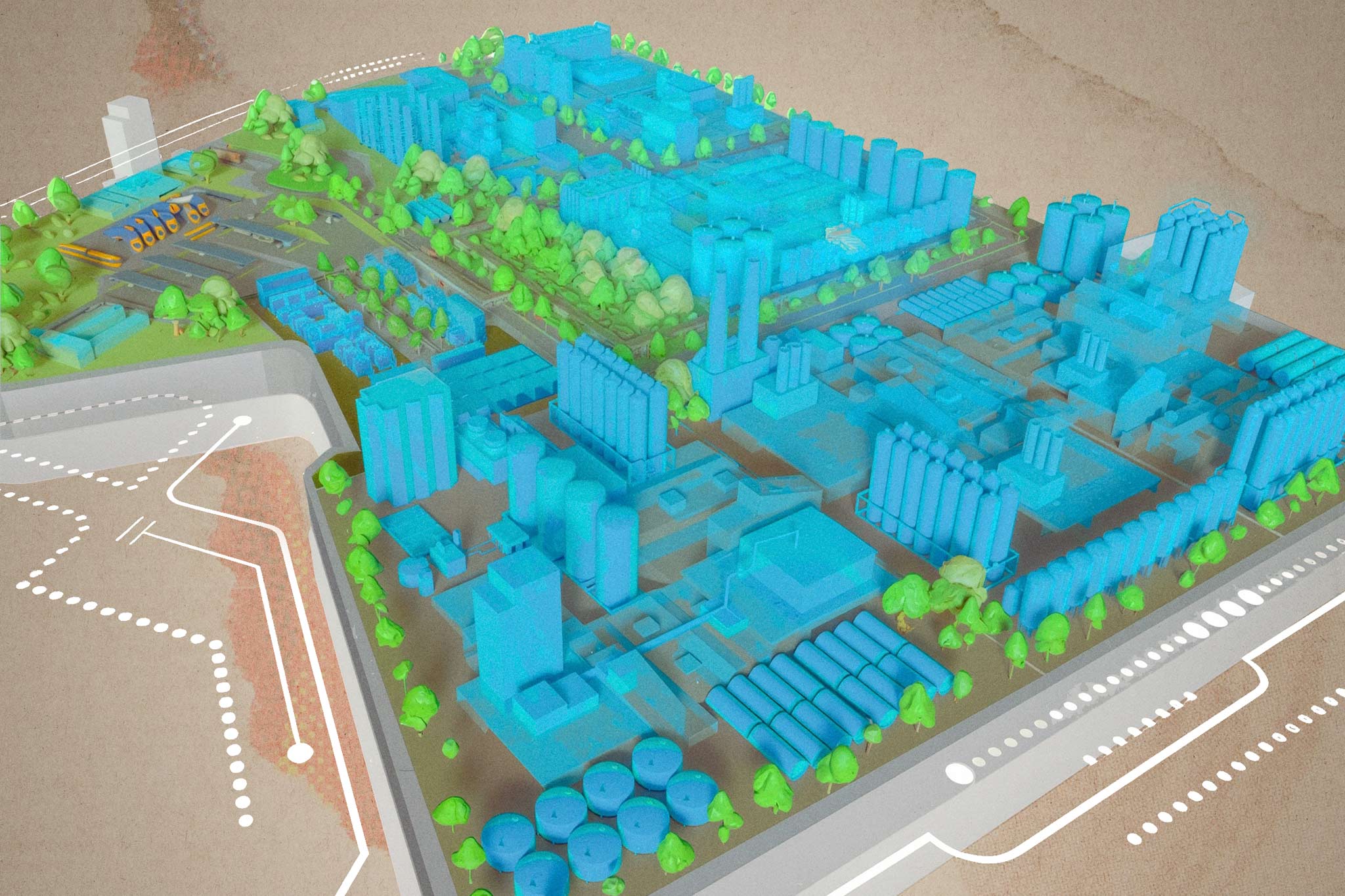
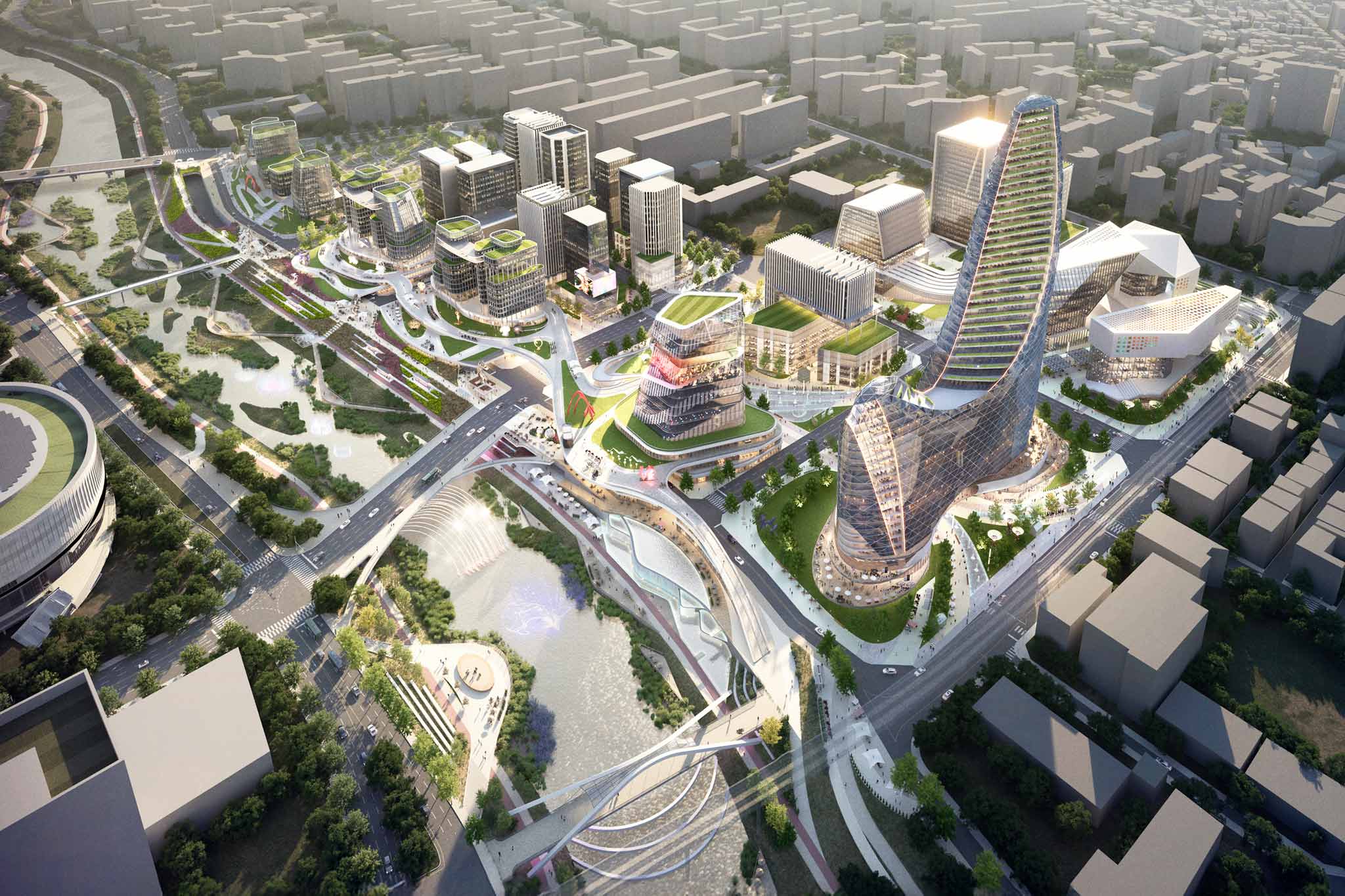
From industrial park to innovation district To understand this change, it is helpful to consider Singapore’s transformation from Industrial Park to Innovation District. When Biopolis, a purpose-built biomedical research and development hub, opened in the early 2000s, it signalled Singapore’s pivot from export-led manufacturing to knowledge-intensive biomedical science. Today, that bet has matured into an integrated innovation district at One-North. Here, Biopolis, Fusionopolis, and Launch Pad are within walking distance of leading universities, public research institutes, and more than 800 startups.
Unlike traditional science parks, One-North was designed as a work-live-play-learn environment, with cafés, residences, childcare and cultural venues deliberately woven into the research fabric to encourage serendipitous collaboration. This urban form has become Singapore’s template for future innovation districts, informing newer clusters such as the Punggol Digital District and planned healthtech and medtech nodes around major hospitals.
“Unlike traditional science parks, One-North was designed as a work-live-play-learn environment”
RIE2030: Precision health and longevity as national projects The Research, Innovation and Enterprise 2030 (RIE2030) plan builds on these foundations for innovation districts. It sets the policy stage for the next phase: The RIE2030 plan, backed by €25 billion over five years, indicates where Singapore expects life sciences to move in the 2030s. Within this framework, health and biomedical sciences remain a national priority. There is now an explicit shift from treating disease to focusing on maximising healthy and successful longevity for a rapidly ageing, highly urban population.
One of the RIE Grand Challenges, Maximising Healthy and Successful Longevity, focuses on understanding the biology of ageing, preserving brain function and physical capacity, and intervening earlier across the life course. At the same time, A*Star’s Genome Institute of Singapore and related centres are building an Asian precision medicine roadmap, combining genomics, epigenetics, single-cell systems and spatial biology to tailor interventions to Singapore’s multi-ethnic population.
The next decade:
Three transformations
1Science parks as health platforms By 2036, Singapore’s life science parks will resemble open, health-enabled districts. Clinical trials, digital diagnostics, and population interventions will be embedded in daily life. This change will accelerate the adoption of new healthcare models and technologies. It will also directly influence how health services are delivered and accessed. One-North already pilots autonomous vehicles, AI systems, and digital twins of infrastructure. Upcoming phases will extend experimentation to community-based health monitoring and preventive care, leading to more proactive and personalised healthcare for residents.
Expect tighter integration among Biopolis, hospitals, primary care networks, and eldercare facilities. This will turn Singapore’s western corridor into a contiguous testbed for healthy ageing solutions. The integration will speed up testing and implementation of new care models. Also, it enables more effective and coordinated interventions. For international companies, this creates a dense environment where discovery, regulatory science, reimbursement pilots, and scale-up manufacturing coexist within a single city-state, accelerating time from innovation to impact.
2AI-native drug discovery and diagnostics For over a decade, Singapore has invested more than €339 million in AI for life sciences through earlier RIE plans, including dedicated funds for AI in drug discovery and development. These efforts have attracted global pharma AI platforms and domestic startups focused on multi-omics integration, adaptive clinical trial design, and algorithmic pathology.
In the coming ten years, AI is likely to become the default layer across Singapore’s life sciences ecosystem, from target identification to clinical decision support and post-market surveillance. This shift will streamline research, improve diagnostic accuracy, and speed up drug development, creating a more effective and responsive healthcare system.
3Biomanufacturing as strategic infrastructure Singapore’s early investments in biologics and vaccine manufacturing have made it a regional leader in biomanufacturing. These efforts have attracted major multinational facilities and A*Star spinoffs. Under RIE2030, the focus is on advancing cell and gene therapies, RNA-based platforms, and continuous bioprocessing, positioning biomanufacturing as essential infrastructure.
Over the next decade, boundaries between labs and factories will likely blur in science parks. Modular facilities colocated with research institutes will support rapid iteration from preclinical proof-of-concept to first-in-human production. This will make manufacturing more flexible and responsive to scientific advances, enabling new therapies to reach patients faster. For Singapore, this is not just about GDP, it also strengthens supply chain resilience as health security and technological sovereignty are increasingly intertwined.
“One-North already pilots autonomous vehicles, AI systems, and digital twins of infrastructure”
Global capital, local patients Together, these transformations are shaping Singapore’s international appeal. Three pillars now attract life science companies: predictable regulation, deep public funding, and an efficient interface between government, academia, and industry. Recent initiatives, such as JLABS Singapore from Johnson & Johnson and the Economic Development Board, further reinforce the city’s role as a favoured Asian base for early-stage biotech and medtech ventures.
There is growing emphasis on ensuring that global capital and technology flows bring tangible outcomes for local patients and workers. Outcomes include better access to cutting-edge trials, upskilling in bioprocessing and data science, or the design of age-friendly neighbourhoods. These shifts will directly improve healthcare access and create new jobs. They will also foster a more skilled workforce, showing the broader social and economic benefits of Singapore’s life sciences strategy. The success of Singapore’s next decade in life sciences will be measured by healthier, longer lives and meaningful jobs, not just patents, valuations or exports.
Small city, oversized ambitions In summary, these ambitions and transformations highlight Singapore’s special approach. The country, smaller than some Chinese districts or Indian suburbs, aligns land use, education, immigration, industrial policy, and health systems to support its life sciences ambitions. Science parks and innovation districts embody this strategy by concentrating talent, capital, and translational capacity in compact, hyper-connected environments.
Over the next ten-year period, Biopolis and its sister districts are set to become centres for developing, testing, and exporting new models of science-driven and age-ready urban living.