France is a nation built on scientific achievement, as reflected in the number of Nobel Prize laureates in this category: 36. As a whole, the country has a strong network of biotech hubs with Lyon, Strasbourg, Nantes, and Toulouse each specialising within its local ecosystem.
For example, Lyon focuses on vaccines and pharmaceuticals, Strasbourg on personalised medicine, Nantes on biotherapies and tissue regeneration, and Toulouse on oncology and bioprocessing. Universities and life science clusters regularly host congresses and conferences that advance science locally, regionally, nationally, and globally, benefiting society.
Paris has a long history as a global life science hub, evolving from 19th-century work in immunology and microbiology to a modern centre uniting biotech, artificial intelligence, and pharma. The Paris region, also known as Île-de-France, built its reputation through research institutes such as the Institut Pasteur (1887) and the Institut Curie (1909), solidifying its status in immunology and oncology.
The city is positioning itself as one of Europe’s leading life science centres. The Paris region leverages state intervention, university reform, and new biological clusters to turn policy into therapies, startups, and manufacturing. Île-de-France acts as a catalyst, collaborating with other regions in the country. In doing so, the Paris region also contributes to a broader collective goal: to help establish France as a European leader in biotech and health.
A state that plans for molecules After the Covid-19 crisis, France made life sciences a national priority to strengthen sovereignty. Over the past five years, the government launched initiatives such as France 2030, a €54 billion national investment plan, and the Health Innovation Plan 2030 to establish the country as a leader in European healthcare innovation and independence. These initiatives focus on digital health, biotherapies, and advanced treatments for cancer and chronic diseases, aiming to develop over 20 new biological drugs.
The government highlights three priority technology fields: biotherapies and biomanufacturing, digital health and medical devices, and emerging areas such as genomic medicine. The strategy aims to launch at least five new biomedicines within five years, double biomanufacturing jobs, and accelerate the growth of unicorns and high-potential small and medium-sized biotech enterprises. The Agency for Health Innovation was created to provide strategic leadership and help companies address regulatory, reimbursement and industrialisation challenges.
The Health Innovation Plan 2030 allocates approximately €7.5 billion to strengthen France’s leadership in health innovation. Government support for research, startups, and manufacturing aligns with Europe’s goal of strategic autonomy in medicines. France 2030 expands on this by integrating health innovation with a broader reindustrialisation strategy, including large-scale project calls, long-term financing, and targeted investments in bio-clusters. Public agencies are involved in land-use planning, infrastructure development, and co-investment in new life science campuses near Paris.
“Success will be measured not only by patents and startup valuations, but also by improved healthcare”
Universities as Engines of Bio-Clusters. The Paris Region’s life sciences sector relies on its universities, which now act as co-architects of innovation districts rather than solely as talent providers. Université Paris–Saclay, formed through the merger of 19 higher education and research institutions, brings together leading engineering schools, science laboratories, and medical research units on a single, purpose-built campus south of Paris.
Paris–Saclay’s graduate and doctoral programs in life sciences and health span basic biology to translational medicine, linking doctoral schools in biological signalling, cellular and molecular biology, and systems biology. Internal funding backs interdisciplinary projects, early-stage industry collaborations, and international partnerships, positioning the university as a steady source of deep-tech innovation.
A similar model shapes Genopole in Évry–Courcouronnes, one of Europe’s first dedicated bio-clusters. Centred around the University of Évry–Val d’Essonne, the cluster brings together 19 academic laboratories, 86 biotech companies, and a major hospital, all within a few kilometres from each other, sharing advanced platforms for imaging, cytometry, synthetic biology, and histology. The campus is expanding through the Genopole Next project, a new 21,000 square metre laboratory and office development created with local authorities and aligned with the France 2030 strategy.
In both Saclay and Évry, universities serve as governance partners and co-founders of infrastructure. They act as intellectual anchors, attracting global industry and talent. This approach, where higher education institutions shape urban development, defines the Paris life science landscape.
The changing map While central Paris is home to historic hospitals and research institutes, the most dynamic life science growth now occurs along an arc from Villejuif through Saclay to Évry, within curated innovation districts. At Villejuif, leaders designated the Paris–Saclay Cancer Cluster as the first national health bio-cluster under France 2030, bringing together the Institut Polytechnique de Paris, Inserm, Sanofi, and Université Paris–Saclay. This group aims to unite the entire oncology innovation chain – academic research, hospitals, startups, and large pharmaceutical companies – on one platform, accelerating progress from discovery to clinical impact.
Further to the southwest, the Plateau de Saclay is now a dense, interdisciplinary innovation hub, recognised among the top global science and technology clusters. Here, Paris–Saclay’s health and pharma ecosystem brings together leading research institutions, major hospitals, global companies, and a rapidly growing number of healthtech and biotech startups. The area’s advantage lies in its concentration of essential capabilities, from AI to materials science, needed to develop tomorrow’s medicines.
Genopole in Évry focuses on stem cells, biotherapies, synthetic and systems biology, and genomic medicine, positioning itself at the forefront of new therapeutic modalities. The cluster co-funds shared technology platforms, giving researchers and companies access to advanced tools, from molecular analytics to bio-informatics, that are otherwise prohibitively expensive. Together, these sites create a polycentric ecosystem, connected by regional transport, coordinated planning, and national funding.
“The Paris Region’s life sciences sector relies on its universities, which now act as co-architects of innovation districts rather than solely as talent providers”
Five years of acceleration The last half‑decade has been characterised less by isolated scientific breakthroughs than by systemic acceleration across the Parisian life science value chain. On the industrial side, the Health Innovation 2030 and France 2030 strategies have already financed more than 80 biotherapy and biomanufacturing projects nationwide. These involve over 250 partners, with a significant share linked to the Paris region and its clusters.
This progress has resulted in new facilities. Dedicated acceleration programs and new R&D sites for major pharmaceutical groups support biomanufacturing projects. Specialised incubators, such as Spartners and the Servier–Bio Labs facility at Paris–Saclay, also benefit. Biotech incubator Spartners provides fully equipped shared laboratories and office space for over 100 scientists, embedding early-stage biotech startups near Servier’s research institute and the broader campus ecosystem.
On the academic and entrepreneurial side, Paris–Saclay’s annual Spring event has become a flagship marketplace for deep-tech innovation, including life sciences. It regularly features startups, technology transfer projects, and collaborative platforms. Genopole companies have won national innovation prizes, including I–Lab awards, particularly in the biopharmaceuticals sector. Local stakeholders also contribute to national major challenges programs. Across the region, this combination of competitive calls, visibility platforms, and shared infrastructure has made it easier for new ventures to emerge, grow, and connect with industrial partners.
Ten‑year horizons and Parisian dreams Looking ahead to the mid‑2030s, Paris and its surrounding science parks will test a politically guided, university-anchored ecosystem. This model could reshape the economics and geography of biomedical innovation in Europe. The Health Innovation 2030 aims to make France a major global player in biomedicines and biomanufacturing. Most of the 21 actions in France 2030’s health component are already underway, with new research, training, and industrial projects in development.
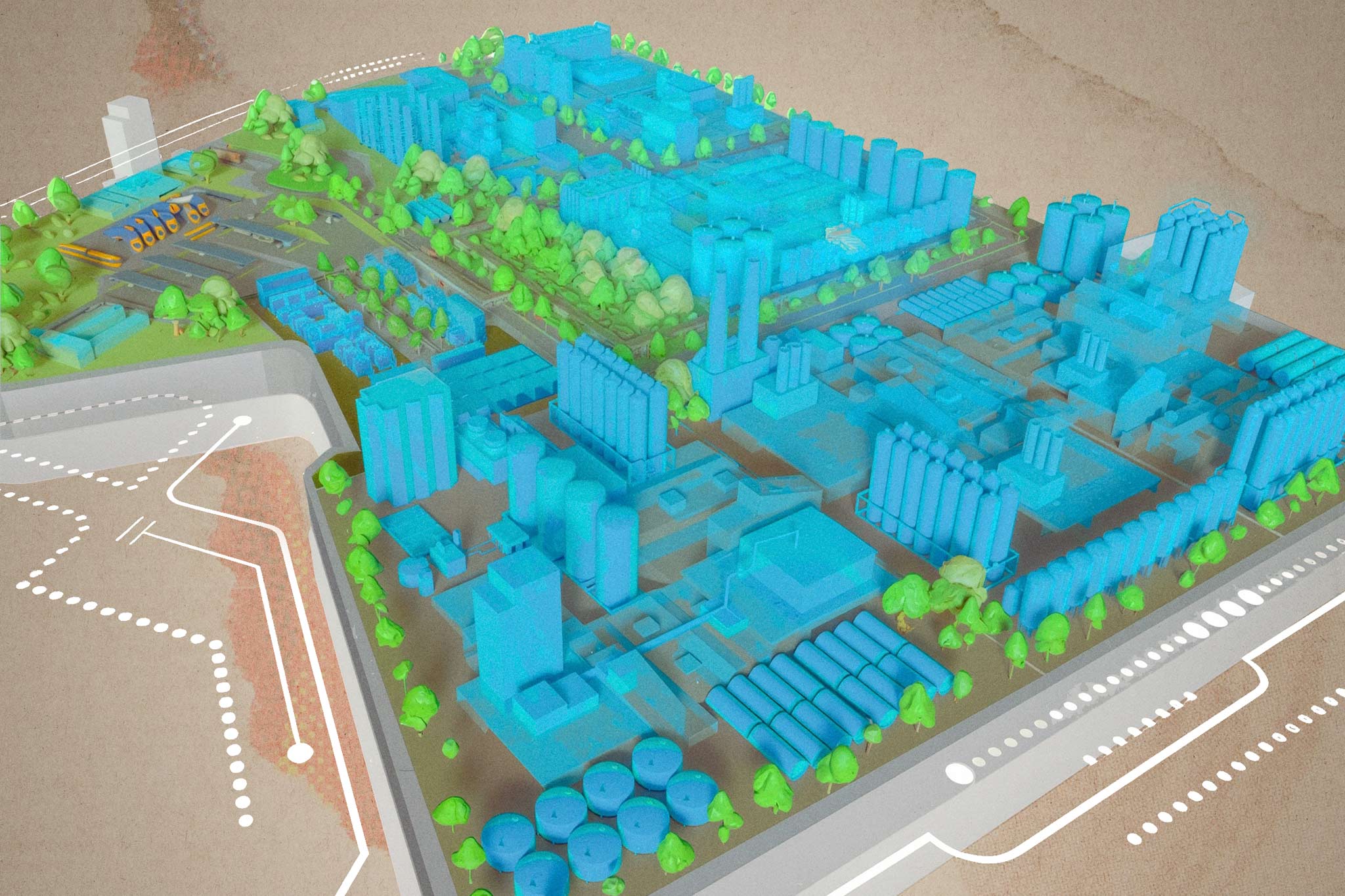
In practice, this means a decade of investment across three areas. First, scaling biotherapies from cell and gene therapies to complex biologics through integrated campuses where discovery labs are located next to GMP*-capable facilities and digital factory twins.
Second, embedding data and AI in care pathways by leveraging the proximity of mathematics, computer science, and clinical medicine at Saclay and Villejuif to develop next-generation diagnostics, decision support systems, and personalised therapy strategies. Third, redesigning hospitals and their surroundings as open innovation districts, with startups, community services, and public transport planned together from the outset.
Beyond policy and infrastructure, a more human vision shapes life science parks in Paris. Imagine a young researcher arriving from central Paris and, within ten minutes on foot, finding a laboratory, a mentor, an investor, and a potential collaborator. The goal is for discoveries at Villejuif, a synthetic biology platform at Évry, and an AI tool at Saclay to collectively shorten the path from hypothesis to treatment.
If achieved, this vision will make the Paris region a reference model for co-created innovation districts with societal missions. The region could move from being an important European hub to a leader. Success will be measured not only by patents and startup valuations, but also by improved healthcare, broader access to innovation, and whether this approach enhances patients’ daily lives in France and beyond.
* GMP facilities are production facilities or clinical trial materials pilot plants for the manufacture of pharmaceutical products. They include the manufacturing space, the storage warehouse for raw and finished products, and support-lab areas.